
News ·
Same car for everyone
Notes from The Future of Technology 2026 in Sofia: when everyone has the same models, clouds and servers, results come from data, integration and people.
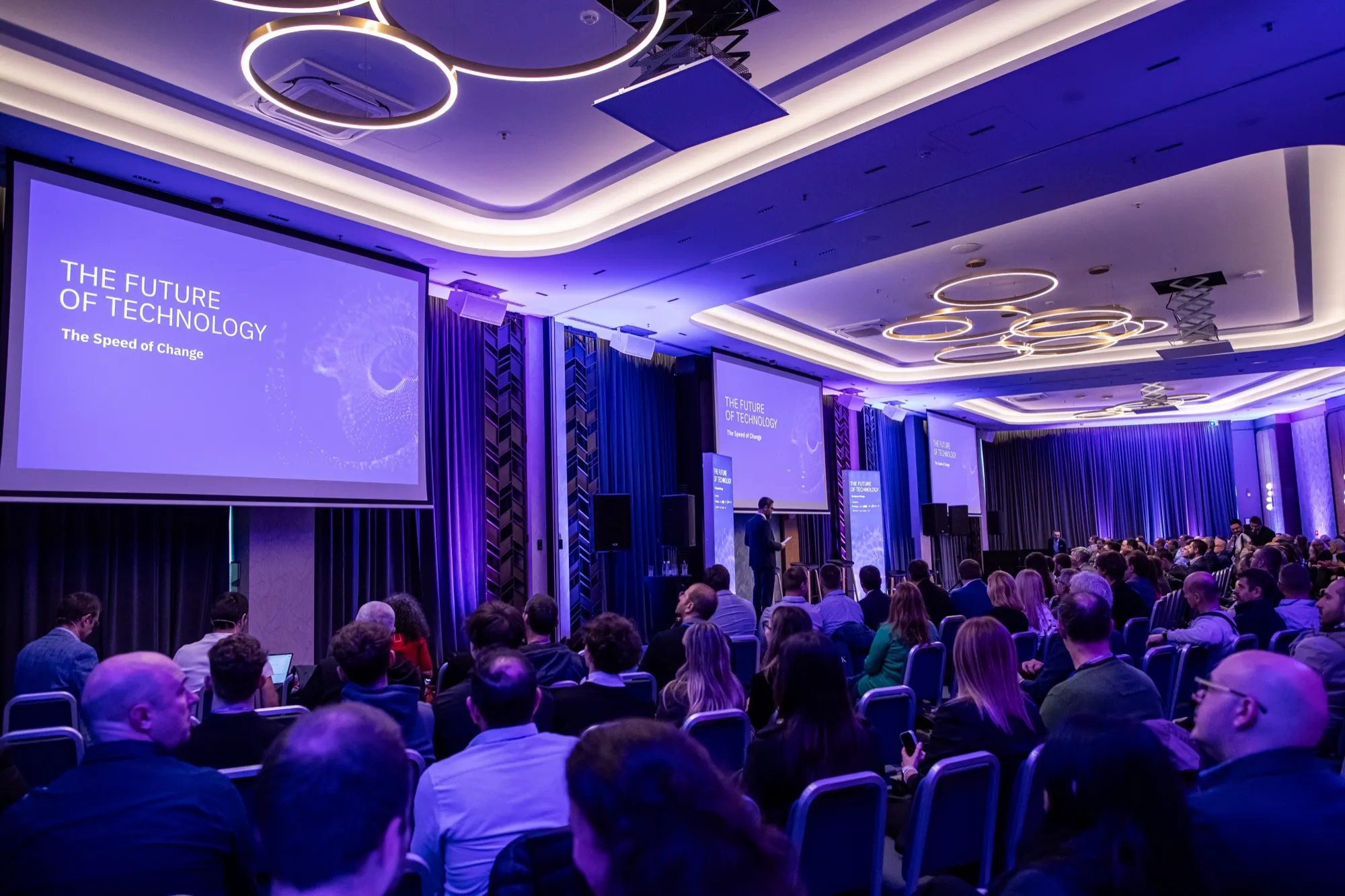
In Formula 2 everyone drives the same car. Same chassis, same engine, same tyres. Twenty-two drivers, twenty-two identical cars.
So the car is not the difference.
The difference is how we learn and how we use our data. The preparation. It is true that not everything depends on us, but preparation does. Always.
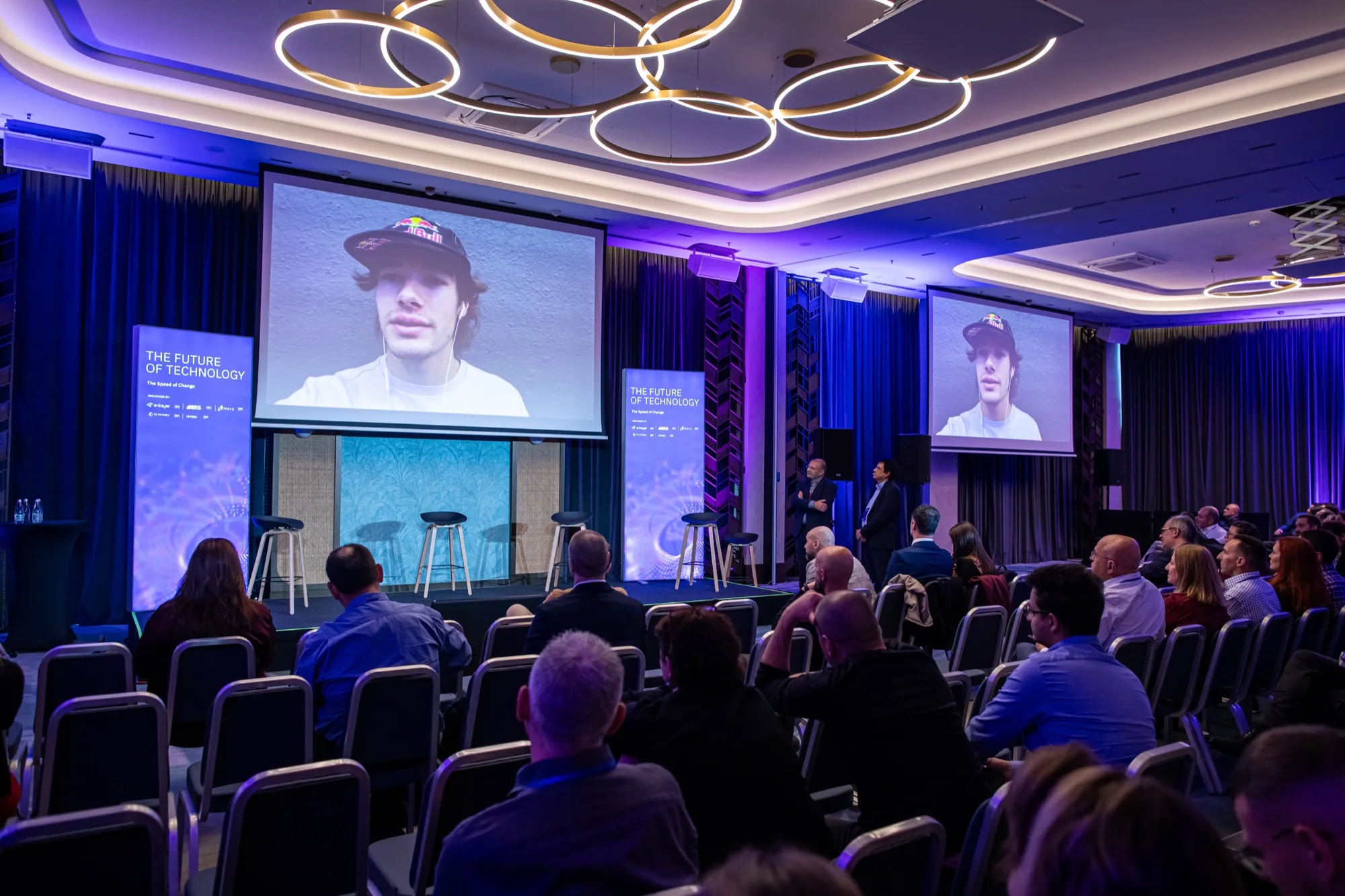
This is how Nikola Tsolov greeted the room at The Future of Technology in Sofia on 5 November. A week earlier he drove his first official Formula 1 session: FP1 in Mexico City with Racing Bulls. P12, 0.126 seconds behind his teammate.
I think he described enterprise IT better than most keynotes do.
Is enterprise IT a spec series now?
Yes. Everyone has access to the same language models. The same clouds. The same servers, from the same distributors. Technology is no longer the competitive advantage. It is the entry ticket.
What is not in the catalogue is the race engineering. How the car connects to the data. How it is set up for this particular track. What happens when something fails in the middle of the race.
That is where results come from now. Data, integration, people.
Who was in the room?
394 registrations, 320 people on the day. 171 of them from more than 80 client organisations: banks, public institutions, telecoms, industry. The rest were IBM, partners, distributors and media.
We organised the event together with IBM, Enlayer and CNsys. The morning was the big picture: AI, agents, data, infrastructure, quantum. The afternoon split into three tracks.
Both IBS sessions were about integration, not AI. On purpose.
Every door is an event
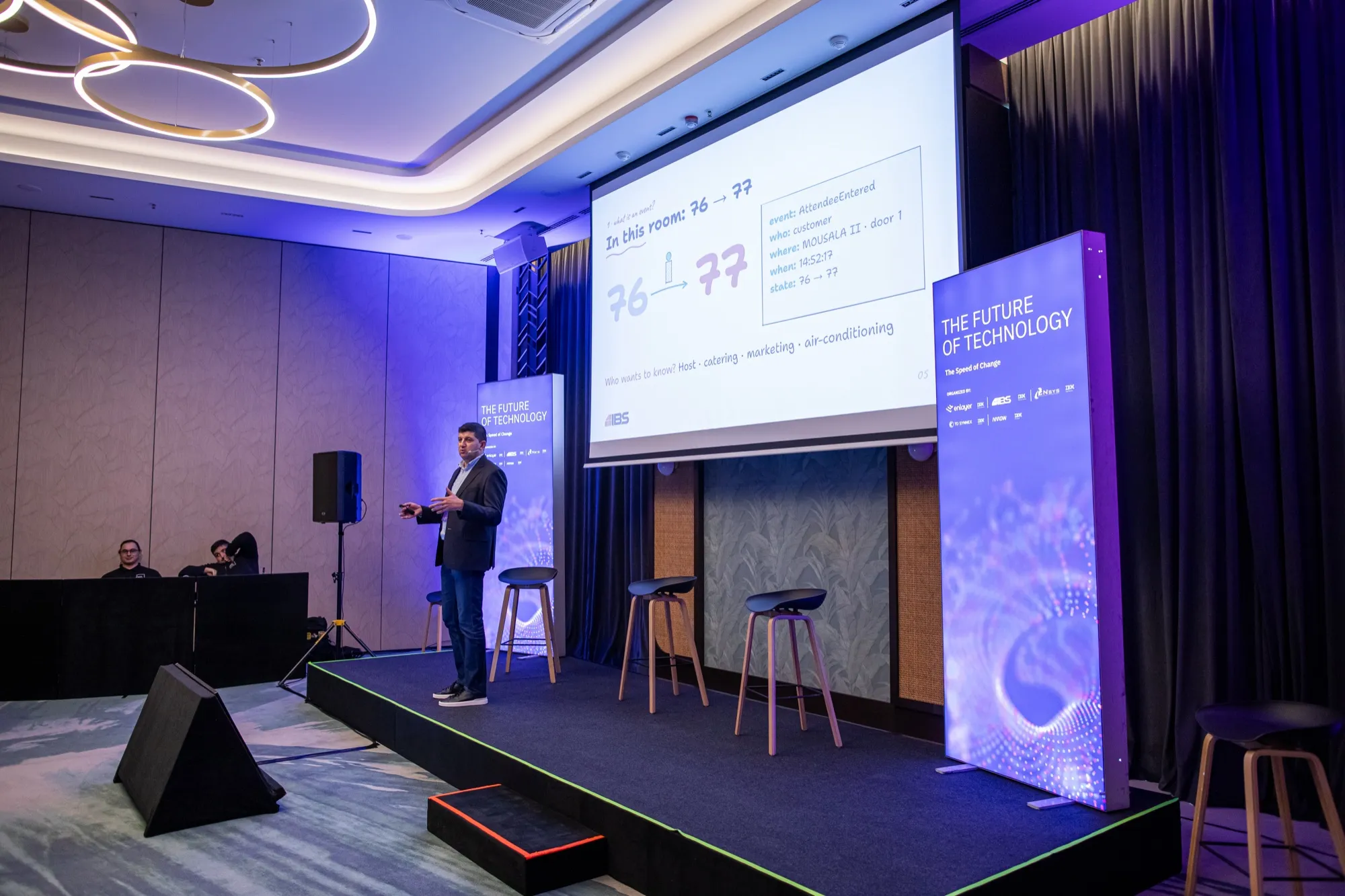
Svilen Stanchev opened his session with a number: 77. That many people had walked through the door of the room: 54 customers, 12 partners, 11 IBMers.
Every entry is an event. A change of state that has already happened and cannot be undone. Who wants to know? The host. Catering. Marketing. Air-conditioning.
The traditional way, everyone asks the registration desk. The desk is swamped, the answers are stale, the coffee runs out. The event-driven way, the door tells everyone. Publish once, and every listener reacts on its own. A fifth system does not need a new interface. It subscribes.
The same is true for a credit application: submitted, scored, approved, signed, paid out. Every arrow is an event. When an AI agent sits at the credit desk, it should wake up on the event, not poll every five minutes. IDC names connecting agents to real-time data as the number one barrier to scaling them.
A working model, switched off
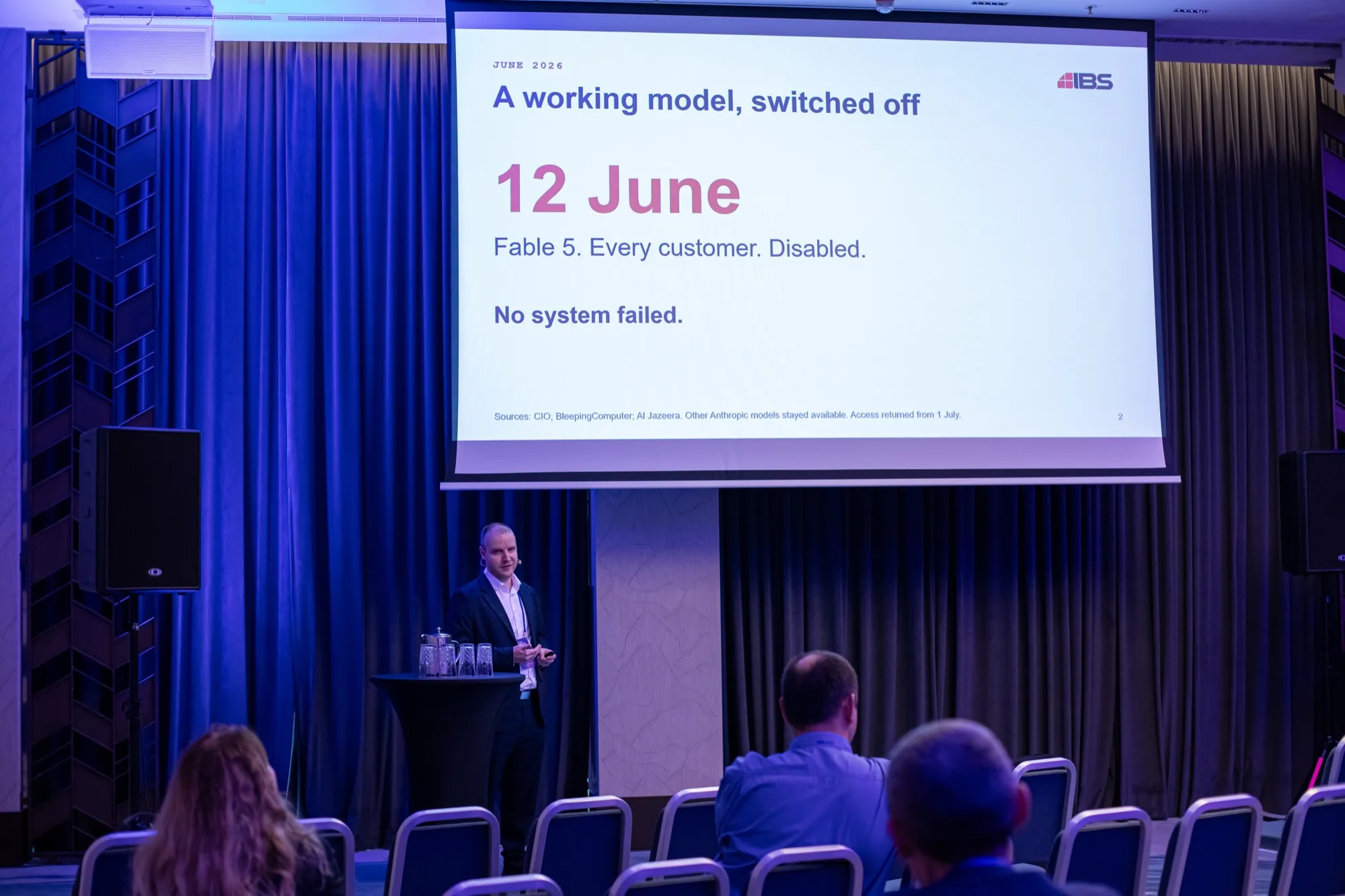
Petar Petrov started with a date: 12 June.
That day Anthropic suspended Fable 5 for every customer to comply with US export controls. Its other models stayed available, and Fable 5 came back from 1 July. No system failed. A working model was switched off by a decision taken on another continent.
Then the question: if your main model disappeared this morning, what would break?
Most companies cannot answer. According to the IBM Institute for Business Value, only 9% of executives really understand their AI dependencies. 71% would struggle to switch vendor or model.
Do the arithmetic. Out of every 100 companies, 91 do not know exactly what depends on their model. And 71 would struggle to replace it even if they knew.
Petar described the agent as a very fast junior with access to production. Nobody gives a junior an admin password on day one. You give them their own identity, least privilege, and someone who approves. An agent needs exactly the same. Five decisions: what it can reach, under whose rules, where those rules are enforced, whether you can switch, and whether you can prove what happened.
Verdict
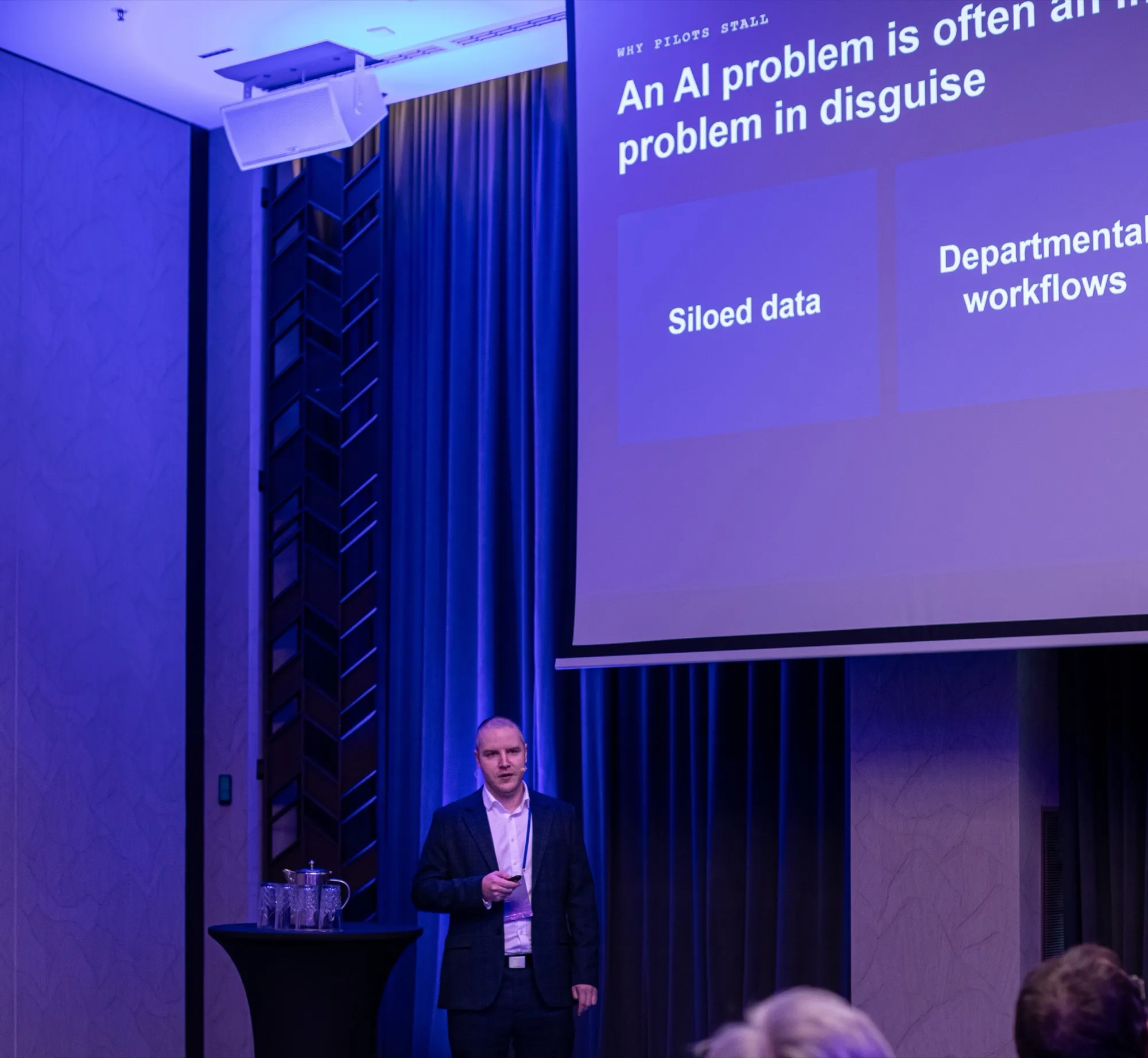
An AI problem is often an integration problem in disguise.
Models will keep changing. The car will keep changing. Build the pit crew.